
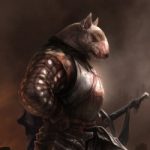
Alright, let’s break down the optimal mage choice for Elden Ring: the Astrologer. Forget the flavor texts; we’re talking efficiency here. This class gives you a solid starting point if your priority is early game spellcasting.
The Astrologer’s inherent advantage is access to Glintstone Pebble from the get-go. It’s a fast, low-cost spell with respectable damage, critical for early damage output and resource management. You’re essentially setting yourself up to capitalize on enemy vulnerabilities early.
The “glass cannon” assessment is accurate. High INT, low Vigor, and Stamina means you’ll be trading blows with careful positioning, timing dodges, and recognizing enemy attack patterns. That Sacred Wooden Shield is your temporary crutch for early encounters; eventually, you will want to transition to shield spells or dodging.
Early levels must focus on leveling up INT to increase spell damage and Mind for FP. Adaptability is key. Don’t be afraid to use the environments or strategic item placement to your advantage to control engagements. Consider investing in a ranged weapon for those annoying encounters where positioning is tricky.
In short: Astrologer is the most efficient choice for spellcasting, prioritizing damage output and minimizing risk. The early game is about strategic aggression and resource management – master these and you’ll dominate.
What class is best for a mage in Elden Ring?
For aspiring Battlemages in Elden Ring, the Prophet class presents a compelling starting point. It’s not necessarily the *absolute* best in every scenario, but its stat spread allows for rapid build diversification. Consider this: the Prophet offers a minimum of 12 in Mind, Strength, Dexterity, and Faith – critical attributes for a hybrid mage. This immediate versatility is HUGE early game. You’re not locked into a purely spellcasting role from the outset.
Why is this so good? Well, think about scaling. Early game scaling is often more impactful than the late game. That initial investment in multiple stats opens up weapon and spell options far quicker than some other classes. You can wield heavier weapons for better melee damage *while* also developing your incantations. This is especially useful for PvP. The ability to switch between hard hitting melee and powerful spells gives you a huge psychological advantage over your opponents. Moreover, the Prophet starts with a high Faith, which is crucial for a variety of offensive and supportive incantations – think fire damage and healing.
However, the Prophet has some weaknesses. Its initial Arcane stat is low, which may slow down the access to certain offensive spells. It is important to consider where you would like to focus your game. Ultimately, the best class is the one that suits your *personal* playstyle, but the Prophet’s balanced distribution makes it a strong contender and a fantastic stepping stone for early build customization, especially for a Battlemage.
What’s the mage build in Elden Ring?
So, you’re asking about a Mage build in Elden Ring? Buckle up, Tarnished, because the Mage is where the real fun begins! This isn’t just a class; it’s a universe of possibilities.
The beauty of the Mage in Elden Ring lies in its versatility. Forget cookie-cutter builds; we’re talking about creating a character that truly reflects your playstyle. Consider these archetypes:
- Pure Sorcerer: The classic glass cannon. You’re slinging spells from a distance, nuking enemies before they even get close. High Intelligence, pure magic damage.
- Battlemage (or Spellblade): This is where things get spicy! You’re weaving spells into your melee combat. Think swift swordplay combined with devastating magic. Requires a balance of Intelligence, Dexterity, and sometimes Strength.
- Hybrid Builds: The beauty of Elden Ring. Mix Faith and Intelligence for incantations like Golden Vow and buffs, enhancing your overall damage or tankiness. Consider Faith for support while still using Magic.
But let’s go deeper. Your choices define you, right? Here’s some food for thought:
- Stat Allocation is Key: Focus on Intelligence for Sorceries. Then, adapt your builds. Do you favor melee? Invest in Vigor and Endurance!
- Armor Matters: Don’t just wear whatever looks cool. Choose armor that maximizes your damage mitigation and poise. The right set can make the difference between life and death.
- Weaponry: Don’t neglect the staff. Optimize it to match your chosen sorceries. Certain staves boost specific spell types, e.g. meteorite staff. Consider a Sword of Night and Flame for a powerful hybrid approach, or a Moonveil Katana for dexterity magic builds.
- Talismans and Flasks: Critical for all builds! Optimize these to your damage type, mana regen, and health. Consider Ritual Sword Talisman or Marika’s Soreseal for more damage, but at a cost.
- Spells, Spells, Spells: Experiment! There are tons of spells. Find the ones that resonate with you. Some are great for close-quarters, some for long range, and some for buffing.
Remember, the best build is the one you enjoy playing. Experiment, adapt, and most importantly, have fun melting faces!
What’s the strongest build type in Elden Ring?
Answering the question “What’s the strongest build in Elden Ring” is tough. The initial 20 levels essentially define your build path, so strategic stat allocation is crucial. The advice to not dabble in Faith as an Astrologer, but to purely focus on Sorcery for late-game damage is… partially correct, but overly simplistic.
It completely ignores build diversity! “Strongest” is subjective and depends on your playstyle. While pure Sorcery builds excel in damage, they can be glass cannons. Consider the following:
1. Hybrid Builds: Don’t be afraid to invest in Vigor! A bit of Strength or Dexterity allows you to wield powerful weapons. A touch of Faith opens up powerful buffs and healing. Quality builds, leveling both Strength and Dexterity, offer incredible weapon variety and adaptability. Even a slight investment in Arcane can be beneficial for bleed builds or certain incantations.
2. Early Game Considerations: Your initial levels DO matter. Focusing solely on one stat early game might leave you struggling. Consider a weapon you find early – can you meet the minimum requirements without gimping your main damage stat? Experimentation is key.
3. Late Game Meta: Endgame builds shift dramatically. Sorcery remains powerful, but strength/faith builds can also thrive with the right weapons, incantations, and ashes of war. The meta evolves constantly. Keep an eye on patch notes and community discussions!
4. The “Best” Build is the Fun Build: Don’t chase numbers blindly. Experiment! Try different weapons, spells, and playstyles. The most potent build is the one you enjoy playing, the one that keeps you engaged. That enjoyment will ultimately be your greatest strength.
Who is the hardest boss in Elden Ring?
The question of the “hardest boss” in Elden Ring inevitably leads to Malenia, Blade of Miquella. She’s become a symbol of the game’s brutal difficulty and, for many players, a true test of skill.
What makes her so challenging? Let’s break it down:
- Waterfowl Dance: This signature move is a flurry of slashes that can instantly kill you if not perfectly dodged. Mastering its timing is crucial.
- Life Steal: Malenia heals with every hit, making defensive playstyles risky. Aggression, counterintuitively, is key to survival.
- High Damage Output: Her attacks hit hard, and she has a range of them to keep you on your toes.
- Phase 2 Transformation: In her second phase, Malenia gains a new set of attacks and increases her damage, making her even more formidable.
Facing Malenia is a right of passage. There’s a massive sense of accomplishment in overcoming her. She highlights:
- The game’s emphasis on learning enemy attack patterns.
- The importance of understanding your character’s build and capabilities.
- The reward for perseverance and patience.
While other bosses offer their own trials, Malenia’s combination of mechanics, relentless offense, and the pressure she exerts cement her status as one of the most iconic and challenging bosses in gaming history.
What’s the hardest boss in Elden Ring?
Malenia, Blade of Miquella, is the undisputed apex predator of the Elden Ring boss roster, a character whose name still strikes fear into the hearts of Tarnished years after the game’s release. Forget meta builds; this is a pure skill check.
Her notorious Waterfowl Dance, a flurry of attacks capable of wiping out even the most optimized builds, is the stuff of legends. Successful dodging requires impeccable timing and positioning – a true test of reaction and game knowledge. Pros and speedrunners regularly utilize specific techniques to avoid or mitigate its damage.
Compounding the difficulty, Malenia heals with every successful hit she lands, meaning you must play flawlessly to avoid handing her an advantage. This mechanic turns every encounter into a high-stakes game of attrition.
Many consider the encounter less about brute force and more about precise execution. Strategies for beating her can vary wildly, from dedicated magic builds to close-range melee specialists who will utilize stagger to gain an advantage. The most successful strategies often involve leveraging specific weapon arts or Ashes of War to break her poise and interrupt her attacks.
In the competitive scene, speedrunners still attempt to kill Malenia with incredible speed and efficiency using exploits and optimized builds, showcasing the depth of the game. Even after countless nerfs and patches, she remains a benchmark for player skill in Elden Ring.
What is the hardest boss in Elden Ring?
Alright chat, so you’re asking about the hardest boss in Elden Ring? Look, no question about it, Elden Ring is a legendary game, right? And the true icon of pain, the ultimate test of your skills, is…Malenia, Blade of Miquella.
This chick is ridiculous. She’s not just difficult, she’s a whole experience. You want the details?
- Waterfowl Dance: That move, the Waterfowl Dance, is the bane of everyone’s existence. Mastering the dodge timings is critical.
- Lifesteal: She heals with every hit. Every. Single. Hit. Even if you block! So you have to be aggressive but also extremely precise.
- Phase Two: Things get real nasty in phase two, with Scarlet Rot making everything even more stressful.
Honestly, the fight against Malenia is a true test of everything you’ve learned in the Lands Between. Here’s the deal:
- Learn her moves. Seriously, watch videos, understand the timings.
- Be patient. Don’t get greedy. Punish her openings.
- Experiment with builds. There’s no single “best” strategy, so find what works for you.
- Accept death. You’re going to die a lot. It’s part of the process.
Good luck, Tarnished. You’ll need it.
What is the most powerful spell?
The strongest spell? Forget the flashy ones. We’re talking raw, unadulterated power. The most sinister Unforgivable Curse, the one you absolutely *don’t* want to face? That’s Avada Kedavra, the Killing Curse. Instant death, end of story. A true game-changer, and trust me, it’s got a rep. This one’s a signature move, the weapon of choice for those who play to win at any cost. Remember that name, because if you hear it in the heat of battle, your survival chances just plummeted.
How many players have 100% completion in Elden Ring?
So, you’re curious how many Tarnished have truly conquered Elden Ring? The numbers are in, and they paint a fascinating picture of perseverance! Across the different platforms, the completion rates vary quite a bit.
On PlayStation, a respectable 10.9% of players have earned every single trophy. Steam players are close behind, with 10.2% achieving a 100% completion rate. But the true surprise comes from Xbox. Here, only a mere 3.7% of players managed to unlock all achievements.
What could explain these differences? Possibly the player base demographics, with Xbox players possibly having a different average play time or experience level, as well as different strategies for getting the achievements. Also, achievement requirements are exactly the same for all platforms, so there is something at play that’s platform dependent.
Think about it: the sheer difficulty of Elden Ring, the intricate world, and the sheer number of bosses mean that completing it takes a serious dedication. To get all the achievements, you must experience all the endings, discover all secrets and find every single weapon, spell and item. It is a testament to the players’ skills.
Who has the most deaths in Elden Ring?
Malenia, Blade of Miquella, reigns supreme as the undisputed queen of death in Elden Ring. Her staggering 329 million defeats from players globally solidify her as the game’s most lethal encounter.
But why so many deaths? Malenia’s reputation stems from her brutal moveset. Her infamous Waterfowl Dance, a flurry of near-instant attacks, can obliterate even high-level Tarnished. Coupled with her self-healing mechanic, which triggers with every successful hit, and the relentless aggression she displays, Malenia demands near-perfect execution and strategic builds.
Beyond her mechanics, her location in the late-game optional area, Elphael, Brace of the Haligtree, means many players will be weary from previous battles. Facing her after tackling other challenging bosses adds to the difficulty, leading to even more deaths.
She is not only a challenging boss but also an iconic and memed boss of Elden Ring. If you want to master Elden Ring, Malenia must be faced.
How many people have 100% Elden Ring?
Alright, so you want the completion numbers for Elden Ring, huh? The grind’s real, but here’s the breakdown for those sweet, sweet 100%ers. PlayStation players? Surprisingly resilient. 10.9% of them conquered the lands between and earned every trophy. Steam’s not too far behind, with 10.2% achieving the platinum or 100% achievement rate. But the Xbox crowd? Seems like they’re feeling the pinch a little more. Only a measly 3.7% have seen everything Elden Ring has to offer.
Now, keep in mind, these numbers aren’t just about skill. They’re a testament to patience, dedication, and maybe a little bit of following the guides. Those late-game bosses and hidden secrets? They’ll test your limits, even for seasoned veterans. Different communities may approach the game differently. PS and Steam players are often more completionist oriented than Xbox players. Still, seeing those numbers shows the insane dedication that it takes to do it.
And here’s a pro tip for any aspiring completionists: optimize your build. Forget just raw damage output – utility matters. Items that boost discovery rates, help with farming, or make exploring easier? Absolute game-changers. Those are the keys to efficient progression. Consider using online resources, like Elden Ring wikis. There are even tools which can help you track everything you have done in game, reducing the chances of replaying the same content, saving precious time.
What are the three Unforgivable Curses?
Alright, so you’re asking about the Unforgivable Curses, the big no-nos in the wizarding world? Here’s the lowdown, straight from a seasoned Hogwarts grad:
The first and perhaps most infamous is Avada Kedavra, the Killing Curse. This spell, with its sickly green flash and chilling sound, instantly ends a life. There’s no counter-curse, no defense, no second chance. It’s pure, unadulterated death. Think of Voldemort’s signature move, and you’ve got the picture.
Then we have the Cruciatus Curse. This one is all about inflicting excruciating pain. It’s a torturing curse, designed to make its victim suffer in unimaginable ways. When used correctly, it can break even the strongest minds. Bellatrix Lestrange was particularly fond of this one, and we all saw the results. Brutal.
Finally, there’s the Imperius Curse. It’s a mind-control spell that gives the caster complete control over the victim’s actions. While it doesn’t inflict physical harm, it strips away free will. Think of it as a puppet master pulling all the strings. Using it makes you both the puppet and the puppeteer.
Remember, using any of these curses can land you a life sentence in Azkaban. So, yeah, probably best to stick to Expelliarmus. Stay safe out there, and always be mindful of the consequences!
What is the most difficult spell to master?
Considering pure difficulty, and isolating a single spell rather than a skill tree, we’re looking at a tier list here. The top contenders for most challenging spells are definitely the Unforgivable Curses.
Starting with Impero, it’s all about mental fortitude, forcing the opponent to execute your commands. The skill ceiling here lies in adapting your instructions to the situation and controlling the controlled to the fullest extent. Then there is Crucio, which is much like a high-damage spell, but with a complex mental preparation of generating the torturous experience.
And then there’s Avada Kedavra – the ultimate finishing move, where instant-kill potential and requires the right conditions of resolve. The timing has to be perfect as well as the target. It is the top-tier spell that requires precise control, a deep understanding of the game, and a willingness to take risks. Alternatively, Patronus Charm could be considered. The difficulty here is more psychological, and it is the ultimate defensive ability. The mental focus required depends on the team composition and what enemies are targeting.

