Apple’s foray into the XR landscape with the Vision Pro has sparked both excitement and debate. While the device boasts impressive technology and seamless integration into the Apple ecosystem, a notable omission has raised eyebrows: dedicated controllers. At a hefty price tag of $3,500, prospective users are rightfully asking whether the experience justifies the investment, especially considering the current reliance on hand tracking and voice commands.
The Hand-Tracking Gambit: Innovation or Limitation?
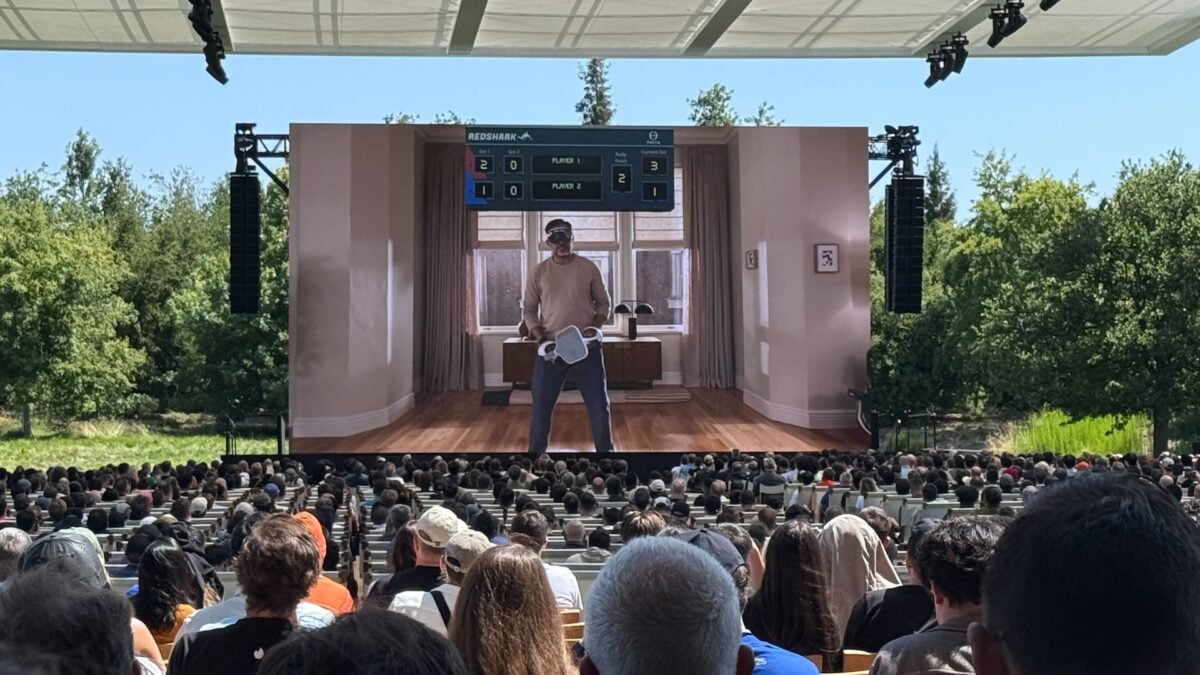
Apple’s decision to forego traditional controllers is undoubtedly a bold one. The company is clearly betting big on the future of intuitive, hand-based interaction. The promise is tantalizing: manipulate virtual objects with the same ease and dexterity as in the real world. However, the reality, at least in the current iteration, isn’t quite there yet. While the hand-tracking technology is sophisticated, it’s not without its limitations. Accuracy can be inconsistent, especially during fast-paced or complex interactions. Furthermore, prolonged use can lead to fatigue, and certain gestures can be misinterpreted, leading to frustration. Would the inclusion of dedicated controllers alleviate these issues and provide a more refined user experience?
One could argue that the lack of controllers is a deliberate design choice, pushing developers to create experiences that are inherently more natural and intuitive. However, this argument overlooks the fact that many existing VR applications are designed around controller input. Adapting these applications to a hand-tracking-only interface can be a significant challenge, potentially limiting the versatility of the Vision Pro. The question is: will developers embrace this challenge, or will they prioritize platforms that offer more familiar control schemes?
Personas: Creepy or Compelling?
Another point of contention surrounding the Vision Pro is the “Personas” feature. This technology aims to create realistic digital avatars of users, allowing them to interact with others in a virtual environment. While the concept is intriguing, the current implementation has been met with mixed reactions. Many users have described the Personas as “creepy” or “uncanny valley,” citing a lack of realism and expressiveness. Would enhanced Personas justify the $3,500 price tag? Perhaps not on their own, but a truly believable and emotionally engaging digital representation could significantly enhance the social aspect of the Vision Pro experience.
A Humorous Aside: My Near-Disastrous VR Cooking Attempt
Speaking of hand tracking and the potential for things to go awry, I recently tried a virtual reality cooking simulator. I thought, “Hey, I’m a decent cook in real life, this will be a breeze!” Famous last words. The game involved making a virtual pizza. Things started off well enough – I virtually kneaded the dough, spread the virtual sauce, and even managed to sprinkle some virtual cheese without too much of a mess. Then came the pepperoni. Apparently, my hand gestures weren’t quite precise enough, because instead of neatly arranging the pepperoni slices, I ended up launching them across the virtual kitchen like miniature frisbees. One even stuck to the virtual ceiling! My virtual chef instructor, a rather stern-looking avatar, just shook his head in silent disapproval. Let’s just say I’m sticking to real-world cooking for now, at least until the hand-tracking technology improves significantly. Maybe with a real pizza, I could have blamed my mess on the dog.
And then there was the time I tried a VR archery game. I’ve always fancied myself a bit of a Robin Hood, at least in my imagination. In reality, my archery skills are… lacking. But I figured, hey, it’s virtual! How hard could it be? Well, apparently, pretty hard. My first arrow went soaring off into the digital wilderness, nowhere near the target. My second arrow… well, let’s just say it nearly took out my virtual instructor. He ducked just in time, giving me a very pointed (pun intended) look of concern. It was at that moment I realized that VR archery, at least with my current coordination levels, was a recipe for virtual disaster. I think I’ll stick to virtual reality golfing for now; at least there, I can blame the wind.
WWDC25 and Beyond: The Future of Vision Pro
As we look ahead to WWDC25, expectations are high that Apple will address these concerns. Will we see the introduction of optional controller support? Will there be significant improvements to the Personas technology? Or will Apple double down on its hand-tracking-only vision? Regardless of the path Apple chooses, one thing is certain: the Vision Pro is a pivotal moment in the evolution of XR technology. Its success will depend not only on its technical prowess but also on its ability to deliver a truly compelling and user-friendly experience. The industry will be watching closely.
Ultimately, the question of whether $3,500 is a worthwhile investment for the Vision Pro is a personal one. For early adopters and tech enthusiasts, the device may represent a glimpse into the future of computing. However, for the average consumer, the price point may be prohibitive, especially considering the current limitations. Only time will tell if Apple can refine the Vision Pro experience to justify its premium price tag and usher in a new era of immersive computing.