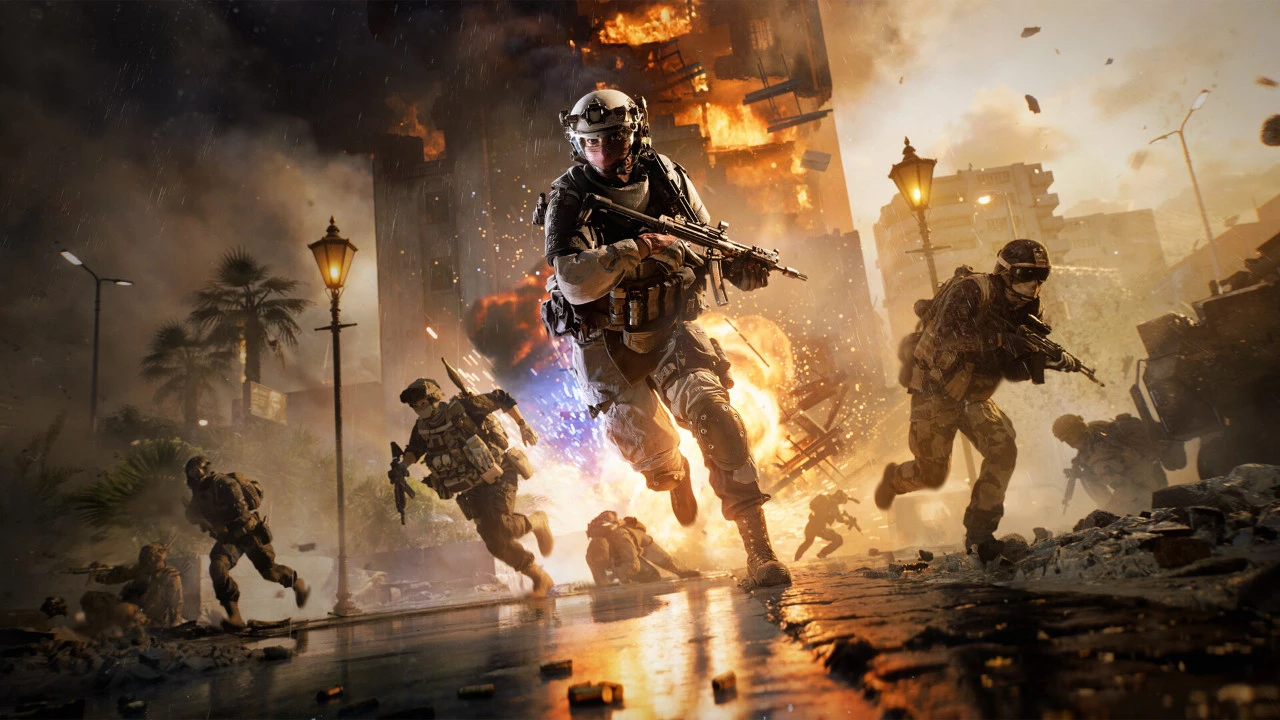
As a veteran in the game development industry, I’ve witnessed numerous titles navigate the complex landscape of player retention and evolving market demands. Today, I want to delve into a recent announcement concerning Battlefield 6, a move that I believe is a calculated and potentially game-changing strategy from the development team at DICE. The upcoming free-to-play week, scheduled from June 30th to July 6th across all platforms, signals a clear intent to recapture the attention of both lapsed players and new enthusiasts.
This initiative isn’t merely a promotional stunt; it’s intrinsically tied to the imminent deployment of the major update 1.3.3.0. In my experience, the success of any live-service game hinges on its ability to consistently deliver a polished and engaging experience. Reports of technical deficiencies and gameplay friction have, unfortunately, shadowed Battlefield 6’s trajectory since its launch. This free week, therefore, serves a dual purpose: it’s a compelling invitation for players to experience the game in its improved state, and it’s a demonstration of the developers’ commitment to addressing player feedback and rectifying past shortcomings.
The timing of this event is also noteworthy. Holding it in conjunction with a significant patch suggests a deliberate effort to showcase the tangible results of the development team’s hard work. The update promises to:
- Address a range of technical inaccuracies, which often include server stability issues, graphical glitches, and input lag.
- Implement enhancements to the core gameplay loop, potentially involving weapon balancing, improved map design elements, and refined control schemes.
- Introduce quality-of-life improvements that can significantly impact player satisfaction, such as more intuitive UI elements or better matchmaking algorithms.
From a development perspective, a free-to-play period of this magnitude is a significant undertaking. It requires robust server infrastructure to handle the influx of players, extensive testing to ensure a smooth experience for newcomers, and a well-defined strategy for converting these temporary players into long-term engaged community members. The success of this event will heavily depend on how well the 1.3.3.0 update has truly revitalized the game. If the promised improvements are substantial and readily apparent, this free week could be the catalyst needed to re-energize the player base and attract a fresh wave of talent to the battlefields.
A Developer’s Perspective on Player Re-Engagement
In my career, I’ve seen firsthand how critical player perception is. When a game faces criticism, especially regarding technical stability, it can create a daunting barrier for new players and a source of frustration for existing ones. The decision to offer a free week is a strong signal that DICE understands this dynamic. It’s an act of faith in their own ability to turn the ship around. They are essentially saying, “Give us a chance to show you what Battlefield 6 can be.”
The key here is the quality of the experience during the free week. If players log in and encounter the same issues that have plagued the game, the initiative will backfire. However, if they are met with a stable, responsive, and enjoyable gameplay experience, the likelihood of them investing further in the game, whether through purchases or simply by dedicating their playtime, increases exponentially. This is not just about free advertising; it’s about demonstrating value and building trust.
Consider the long-term implications. A successful free week can lead to a resurgence in player numbers, which in turn can foster a more vibrant and active community. This creates a positive feedback loop where more players mean more matches, more content creation by the community (like streams and videos), and ultimately, a healthier ecosystem for the game. It’s a strategy that, when executed correctly, can be incredibly potent.
My team once worked on a title that experienced a similar rocky launch. We implemented a “return to glory” campaign that included extended free trials and significant content drops. The initial response was mixed, but the team persevered, focusing relentlessly on bug fixes and player-requested features. Eventually, the game found its footing. I remember one particular evening, during a free weekend event, I was playing on our most popular map. The comms were electric. Players were coordinating, laughing, and genuinely having a blast. It felt like we had finally achieved what we set out to do. Then, in the middle of a particularly intense firefight, I heard my squad leader shout, “Alright team, let’s push the objective! We’ve got this! It’s like that time we were all playing that crazy online game and the power went out for half the neighborhood, but we just moved to a single laptop and kept playing in the dark with flashlights until dawn!” We all burst out laughing, and it created this incredible moment of camaraderie that transcended the game itself. It was a reminder of why we pour our hearts into this work – to create these shared experiences and memories for players.
This anecdote, while seemingly small, highlights the power of shared experience and unexpected moments of joy that games can provide. It’s these kinds of memories that developers strive to create, and it’s precisely this kind of positive engagement that DICE is likely aiming to foster with their free week for Battlefield 6. The hope is that players will not only enjoy the improved gameplay but also forge new connections and create their own memorable moments within the game’s world.
The success of this endeavor will be a testament to DICE’s resilience and their understanding of the modern gaming market. It’s a bold move, but one that holds the potential to significantly alter the future trajectory of Battlefield 6. I will be watching with keen interest to see how this strategy unfolds.