
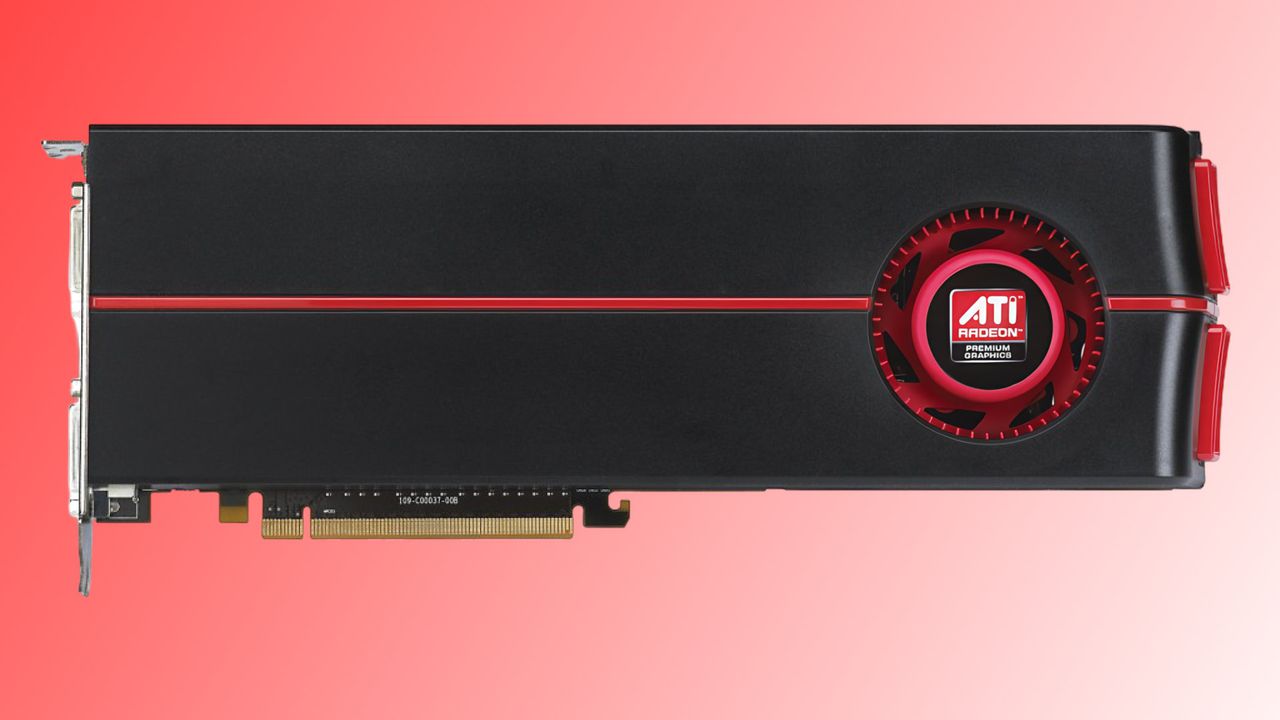
The world of open-source software and legacy hardware often intertwine in fascinating ways, and a recent development perfectly encapsulates this synergy. A crucial Linux driver update for an array of vintage AMD GPUs has been released, promising to extend the operational life and utility of these older components. What makes this particular update noteworthy is the instrumental role played by Copilot AI, an artificial intelligence assistant, in the extensive refactoring process. This collaborative effort between human developers and advanced AI highlights a burgeoning trend in software maintenance, where the complexities of preserving outdated technology are being tackled with innovative tools, ensuring that perfectly functional hardware doesn’t prematurely become e-waste. Today, the focus was primarily on refactoring existing code; tomorrow, the implications for entire driver sets could be transformative.
The update specifically targets a range of AMD graphics processors that, despite their age, remain capable of handling numerous tasks, particularly in non-demanding environments or retro computing setups. The core of this update involves significant code refactoring. For those unfamiliar, refactoring is the process of restructuring existing computer code—changing the factoring—without changing its external behavior. It’s about improving the code’s internal structure, making it more readable, maintainable, and efficient, often by simplifying complex sections or eliminating redundancies. In the context of a Linux driver, this means a more stable, potentially faster, and certainly more future-proof foundation for these vintage GPUs. Older drivers can be notoriously opaque, riddled with legacy assumptions, and difficult to integrate with modern kernels. This refactoring effort brings them closer to current standards, enhancing their compatibility and performance within contemporary Linux distributions.
The Collaborative Edge: Copilot AI’s Contribution
The involvement of Copilot AI represents a significant milestone. While human developers provided the overarching strategy and final code review, Copilot assisted in navigating the labyrinthine codebases characteristic of decades-old drivers. Its ability to suggest code completions, identify patterns, and even propose entire functions based on context proved invaluable for accelerating the refactoring process. This isn’t about AI replacing developers, but rather augmenting their capabilities, allowing them to focus on higher-level architectural decisions and critical problem-solving while the AI handles more repetitive or pattern-matching tasks. For legacy code, where documentation might be sparse or outdated, an AI capable of understanding code intent and suggesting modern equivalents can dramatically reduce development time and effort. It essentially acts as an intelligent pair programmer, providing a constant stream of suggestions and catching potential errors before they become larger issues.
The broader implications of this human-AI collaboration are profound. It opens up possibilities for maintaining vast amounts of legacy software that would otherwise be deemed too costly or time-consuming to update manually. From industrial control systems to embedded devices, countless pieces of critical infrastructure rely on older, sometimes proprietary, code. Tools like Copilot could democratize access to sophisticated maintenance, extending the lifespan of essential systems and reducing the environmental impact associated with constant hardware upgrades. Furthermore, it allows for a more sustainable approach to technology, challenging the planned obsolescence model that often dictates the life cycle of electronic components. By keeping older hardware relevant, we reduce demand for new manufacturing and minimize electronic waste.
A Humorous Detour: The Perils and Joys of Vintage Tech
The dedication required to keep vintage hardware running, especially for enthusiast projects, often leads to memorable, sometimes utterly absurd, situations. I recall one particularly trying weekend attempting to install a specialized driver for an ancient network card in a custom-built Linux server from the early 2000s. The goal was modest: create a local file server out of spare parts. The hardware itself was a Frankenstein’s monster of components salvaged from various defunct machines, each with its own quirks. After hours of wrestling with obscure kernel modules, conflicting libraries, and a cryptic forum post from 2005 written in what I can only describe as “ancient internet slang,” I finally got the network card to theoretically initialize. The triumph was short-lived, however, as the card then proceeded to negotiate a connection at a blistering 10 megabits per second, not its advertised 100, effectively turning my high-speed file server into a digital molasses dispenser. The sheer frustration, followed by the uncontrollable laughter at the absurdity of my situation, underscored the unique blend of agony and ecstasy that defines working with vintage tech.
The saga didn’t end there. Determined not to be defeated by a piece of silicon designed before smartphones were ubiquitous, I spent another entire day meticulously scouring GitHub repositories for community-contributed patches. The breakthrough came not from a sophisticated driver, but from a single, uncommented line of code I found embedded in a forgotten thread, which, when manually inserted into the kernel module’s source and recompiled, magically unlocked the full 100 Mbps speed. The celebration felt disproportionate to the actual achievement – a single network card now operating at its intended speed – but it was a testament to the perseverance and ingenuity that the open-source community, and lone enthusiasts like myself, often display. It’s moments like these, filled with unexpected hurdles and even more unexpected solutions, that truly highlight why projects like the AMD driver update are so cherished. They validate the belief that with enough effort, and now with a little help from AI, even the oldest hardware can be given a new lease on life.
The Path Forward: From Refactoring to Revelation?
This successful refactoring project naturally leads to a larger question posed by the original observation: “Tomorrow, the whole driver set?” The prospect of AI not just assisting but potentially generating entire, complex driver sets is a tantalizing one. While current AI models excel at pattern recognition, code completion, and even generating functional code snippets, creating an entire, fully optimized, and bug-free driver from scratch for a complex piece of hardware remains a formidable challenge. Such a task would require not only deep understanding of hardware architecture but also intricate knowledge of operating system kernels, diverse programming paradigms, and rigorous testing methodologies. However, as AI capabilities continue to advance at an exponential rate, perhaps the vision of a self-generating, self-optimizing driver set is not merely science fiction but a plausible future. The collaboration seen with the vintage AMD GPUs is a crucial stepping stone, demonstrating that AI can be a powerful partner in the ongoing endeavor to keep our digital world both functional and sustainable. The journey from refactoring to potential revelation has just begun.