
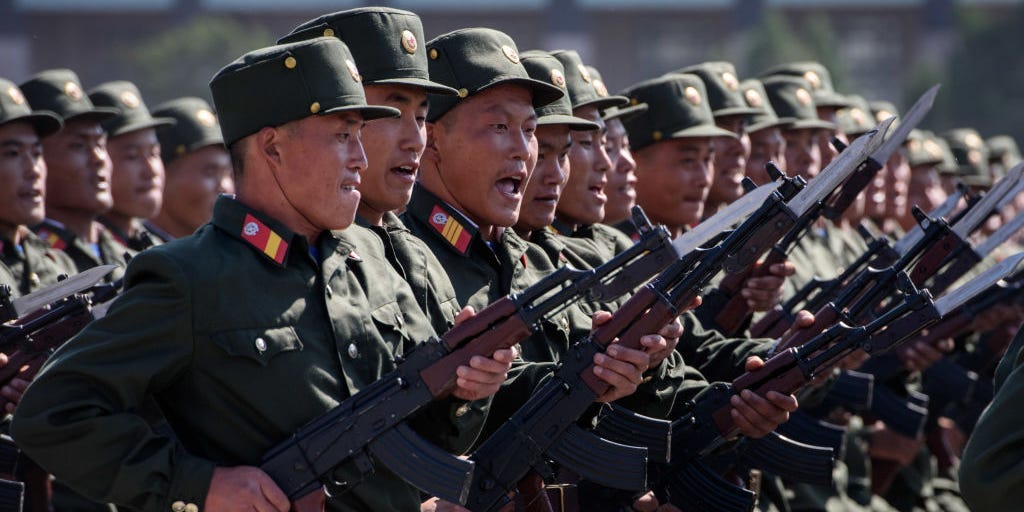
So, here’s the lowdown: North Korea, that enigmatic hermit kingdom, is apparently getting a crash course in modern warfare, and not from any of its usual suspects. Turns out, they’re learning from the ongoing conflict in Ukraine. Now, before you picture Kim Jong-un personally leading a charge against Ukrainian trenches (though, wouldn’t *that* be a headline!), let’s clarify. Military analysts are pointing to indirect observation and intelligence gathering as the primary means of North Korea’s learning process. They’re watching, analyzing, and learning from the cutting-edge battle tactics deployed in the Ukrainian conflict, specifically the use of drones, electronic warfare, and combined arms maneuvers. This worries South Korea, and frankly, it should worry us all.
The implications are significant. North Korea’s military doctrine, notoriously reliant on sheer manpower and outdated weaponry, could be undergoing a stealthy modernization. Imagine the implications: a more agile, technologically savvy North Korean army represents a considerably more dangerous threat to its neighbours. The potential for escalation in the Korean Peninsula, already a volatile region, increases significantly. The worry isn’t just hypothetical; the observed developments require serious attention and strategic recalibration by South Korea and its allies. Experts suggest North Korea’s intelligence network is actively studying the effectiveness of different weapons systems and tactical approaches in the Ukrainian war, and this knowledge could be swiftly incorporated into their own training and doctrines.
What exactly are they learning? We’re talking about a range of crucial aspects. The effective use of drones for reconnaissance, targeting, and even attack is a game-changer. Electronic warfare capabilities are also being scrutinized – the ability to disrupt enemy communications and systems is a huge advantage in modern conflict. Further, understanding the complexities of combined arms operations, where different branches of the military work together seamlessly, is vital. Ukraine has demonstrated the effectiveness of this approach, and it’s something North Korea could potentially emulate, improving the coordination and lethality of their forces.
This new knowledge isn’t just theoretical. We’re talking about a potentially drastic upgrade in their capacity for aggression. The concern isn’t simply about improved weaponry, but about a sophisticated understanding of how to employ those weapons. Think of it as the difference between a toolbox full of great tools and someone who actually knows how to use them effectively to build something extraordinary (or, in this case, potentially devastating).
Now, for a little lighter take on all this serious analysis. I remember one time, back in my backpacking days (yes, I’ve had a wilder youth than this keyboard warrior persona might suggest!), I was trying to make instant noodles in a hostel dorm in Eastern Europe. The instructions were in, let’s say, “creative” translation. Picture this: a tiny, cramped room, a boiling kettle threatening to explode, and me desperately trying to decipher instructions that involved a “vigorous swirling” and a “hint of mystical aroma.” The result? Let’s just say it resembled more a science experiment gone wrong than a delicious meal. I was convinced I’d spontaneously combust! The whole incident was hilariously awful, but it taught me a valuable lesson about the importance of clear instructions. Similarly, North Korea’s learning curve from the Ukrainian conflict could be bumpy, with unexpected results. It highlights how even the best data, without proper understanding and integration, can lead to surprising outcomes.
Another time, during a particularly chaotic game of paintball, my team (let’s call us the “Magnificent Misfits”) got completely separated in a dense forest. We were supposed to be using coordinated attacks. Instead, it devolved into a series of hilarious, and somewhat embarrassing, individual skirmishes. One teammate ended up face-planted in a mud puddle while attempting a stealthy advance. Another spent 20 minutes arguing with a squirrel about who had the right of way to the best camouflage bush. We learned then that coordination and teamwork, no matter how carefully planned, can easily fall apart under unexpected pressure. Similarly, North Korea’s adoption of advanced military tactics will ultimately depend on their ability to effectively integrate and utilize this newly acquired knowledge within their existing military structure and cultural context.
| Observed Learning Area | Potential Impact on North Korea |
|---|---|
| Drone Warfare | Enhanced reconnaissance, precision strikes, asymmetric warfare capabilities |
| Electronic Warfare | Disruption of enemy communication and systems, improved battlefield awareness |
| Combined Arms Operations | Increased coordination and lethality of military forces |
In conclusion, while the situation is serious, we can’t ignore the inherent complexities and potential for unforeseen consequences. The learning process for North Korea, much like my noodle-making fiasco and paintball misadventures, is far from straightforward. This observation highlights the unpredictable nature of military modernization and the importance of continuous vigilance from South Korea and the international community.