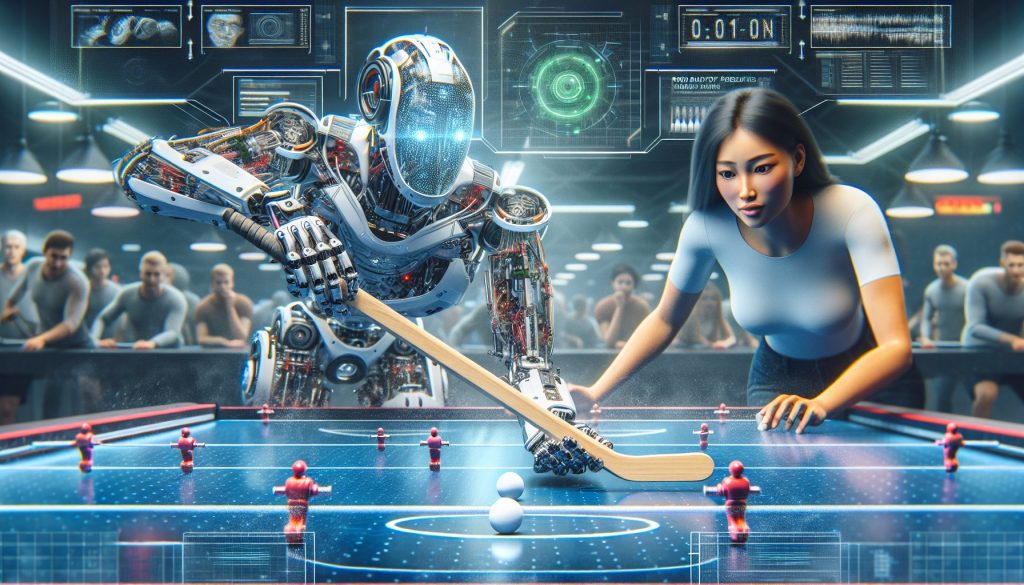
The gaming world is buzzing, and not just from the latest console launches or blockbuster reveals. This time, the conversation is all about Artificial Intelligence. Specifically, it’s about what industry titans think of it. Recently, Strauss Zelnick, the powerhouse CEO behind Take-Two Interactive – the folks who bring us Grand Theft Auto, Red Dead Redemption, and a whole host of other legendary titles – weighed in with a fascinating, two-pronged perspective. Zelnick is “all in” on AI for boosting development efficiency, yet he remains deeply skeptical that it can truly birth an “original hit” like a new GTA. This isn’t just an interesting take; it’s a critical lens through which we should all examine the future of game creation.
Zelnick’s stance perfectly encapsulates the current industry paradox. On one hand, the potential for AI to streamline mundane, repetitive tasks is undeniably massive. Imagine artists no longer spending countless hours creating variations of a single asset, or testers sifting through endless lines of code for bugs. This is where AI shines, offering a promise of faster, cheaper, and potentially higher-quality development cycles. But on the other hand, there’s the existential question: can a machine ever possess the spark of human creativity, the cultural understanding, the raw emotional intelligence needed to craft a narrative, a world, or a gameplay loop that genuinely captivates millions and defines an era? Zelnick’s skepticism, particularly given Take-Two’s legacy of groundbreaking creativity, is a powerful reminder that there’s more to making a hit than just technical prowess.
AI as a Game-Changer for Efficiency
Let’s be clear: Zelnick isn’t dismissing AI out of hand. Quite the opposite, he sees its immense value in specific areas. Think of AI as a super-powered assistant, capable of tackling the more laborious aspects of game development. This isn’t theoretical; many studios are already leveraging AI in various capacities. Here’s a quick look at where AI is making significant strides and helping developers:
- Procedural Content Generation: AI can generate vast, detailed landscapes, cities, dungeons, or even entire quest lines, significantly reducing the manual effort required by designers. This means larger, more diverse worlds can be created faster, enriching player experiences without exorbitant human resource allocation.
- Asset Creation and Optimization: From generating textures and 3D models based on simple prompts to optimizing existing assets for performance, AI tools can accelerate the art pipeline. Imagine an AI learning a studio’s unique art style and generating consistent assets across an entire game, ensuring visual harmony and saving artists countless hours on repetitive tasks.
- Quality Assurance and Testing: AI-powered bots can tirelessly run through games, identify bugs, stress-test systems, and even suggest improvements, far more efficiently than human testers alone. This drastically cuts down on development time and helps ensure a smoother launch experience for players.
- NPC Behavior and AI: While meta, AI is already crucial for creating more believable and dynamic non-player characters, enhancing enemy AI, and creating responsive game worlds. Advanced AI can make in-game characters react more naturally and intelligently, making the game world feel more alive.
- Localization and Voice Acting: AI can rapidly translate game text into multiple languages and even generate synthetic voices with impressive realism, making games accessible to a global audience much faster and more cost-effectively, breaking down language barriers for wider market reach.
- Code Generation and Optimization: AI can assist programmers by suggesting code snippets, identifying inefficiencies, or even generating basic scripts, freeing up developers for more complex and creative problem-solving tasks. This enhances productivity and code quality.
By automating these areas, developers can spend more time on what truly matters: innovation, storytelling, and refining gameplay experiences. This is the promise of AI: making the creative process more fluid by removing bottlenecks and allowing human talent to focus on what only humans can do best.
The Elusive Spark: Why AI Might Not Create the Next Grand Theft Auto
Now, for the crux of Zelnick’s argument. He firmly believes that while AI can be incredibly efficient, it currently lacks the capacity to generate an “original hit.” Why? Because true originality, especially in a medium as complex and culturally embedded as video games, stems from something deeply human. A game like Grand Theft Auto isn’t just a collection of assets and code; it’s a biting satire, a commentary on society, a masterclass in emergent narrative, and a playground for player agency. It’s born from observation, cultural understanding, and a uniquely human perspective on humor, drama, and freedom.
“AI can make video-game development more efficient, but it can’t replicate the originality needed to create GTA.” – Strauss Zelnick
The distinction lies between generation and innovation. AI is fantastic at generating variations based on existing data. It can learn patterns, styles, and tropes from countless games and then produce something similar. But can it invent an entirely new genre? Can it devise a gameplay mechanic that fundamentally shifts player expectations? Can it craft a story that resonates on a profound emotional level, exploring themes of morality, loss, or triumph with genuine insight? These are questions that currently stump even the most advanced AI models. Innovation often comes from breaking rules, challenging conventions, and introducing entirely new concepts that haven’t been seen before – things that are hard for an algorithm trained on existing data to accomplish. It requires a leap of intuition and imagination that, for now, remains uniquely human.
The Enduring Power of the Human Touch
This brings us to the undeniable importance of the human touch. Game development, at its heart, is an artistic endeavor. It requires visionaries, storytellers, psychologists, and artists working in concert. It needs:
- Artistic Direction: A cohesive vision that ties together all elements of a game, giving it a unique identity and aesthetic. This isn’t merely about generating assets, but about defining a style and mood that resonates.
- Narrative Depth: Stories that move us, characters we care about, and worlds that feel alive and meaningful. These often spring from human experiences and empathy, weaving complex themes that an AI might struggle to genuinely comprehend or originate.
- Player Psychology: Understanding what makes a game fun, challenging, fair, and engaging – insights that are often gleaned through iterative design, playtesting, and deep intuition about human behavior. This goes beyond data analysis to include creative risk-taking based on anticipated player reactions.
- Cultural Resonance: The ability to tap into current trends, societal discussions, or timeless human emotions that make a game feel relevant and impactful. A game like GTA thrives on its cultural satire, which is inherently a human interpretive act.
While AI can certainly assist in these areas by generating drafts or analyzing data, the ultimate creative decisions, the spark of genius, and the emotional core will likely remain firmly in human hands for the foreseeable future. The goal isn’t to replace creativity, but to augment it, allowing human visionaries to push boundaries further.
Looking Ahead: A Symbiotic Future
So, what does this mean for the future of gaming? It likely points towards a symbiotic relationship where humans leverage AI as a powerful tool, rather than being replaced by it. Developers will become more akin to conductors, orchestrating AI to perform tasks while they focus on the grand vision, the narrative arcs, and the innovative mechanics. The industry will need to adapt, fostering new skill sets that involve prompt engineering, AI supervision, and critical evaluation of AI-generated content. Training developers to effectively utilize AI tools will be crucial for maintaining a competitive edge and fostering new forms of creativity.
There are also challenges, of course. Ethical considerations around data sourcing, potential biases in AI outputs, and the risk of content homogenization are all real concerns that need careful navigation. If everyone uses the same AI models trained on similar data, we might end up with games that feel too much alike, stifling the very originality Zelnick champions. However, Zelnick’s balanced perspective offers a clear path forward: embrace AI for efficiency, but never lose sight of the irreplaceable human element that brings truly original and impactful games to life. The next Grand Theft Auto will still need a human brain behind its satirical brilliance, its groundbreaking design, and its profound cultural impact, even if AI helped build its sprawling city and populate its diverse world.