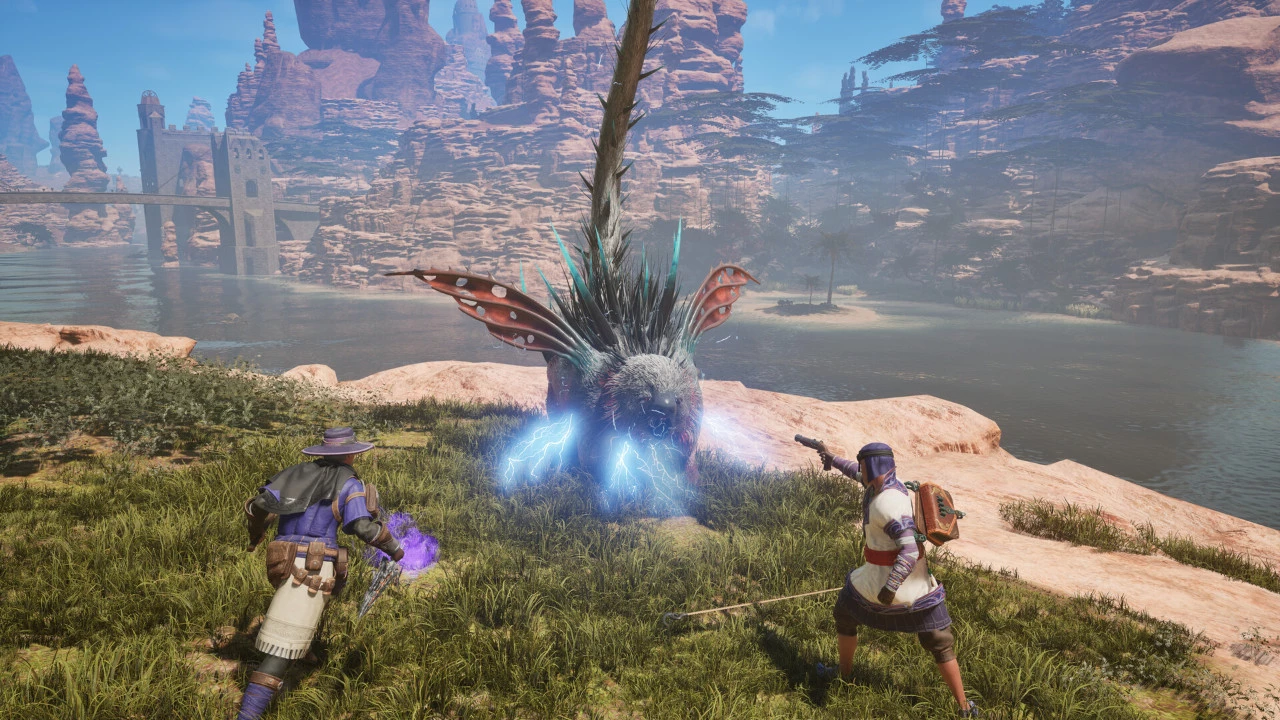
As a seasoned game developer, I have witnessed countless projects navigate the treacherous waters of production. Today, we confront the news that Outward 2, the highly anticipated sequel to the cult-classic hardcore RPG, has officially pushed its release window to 2027. While the initial roadmap targeted a PC Early Access launch on July 7 of this year, the development team at Nine Dots Studio has made the difficult, yet prudent, decision to hit the brakes. In our industry, such a significant delay is often viewed by the public as a sign of failure, but from the perspective of an engineer or a lead designer, this is a calculated tactical retreat.
The Reality of Ambitious Game Design
Developing an open-world RPG with emergent gameplay, complex survival mechanics, and seamless multiplayer is a monumental task. When you add the layer of “hardcore” design philosophy—where every death has consequences and every meal requires preparation—the margin for error shrinks to near zero. A delay of this magnitude suggests that the studio is not just fixing bugs; they are likely refining their core mechanics to ensure the vision truly meets the high bar set by the original title. Quality, after all, is a choice that must be made daily, and sometimes that choice requires an extra year or two of iteration.
“True excellence in game development is not defined by the speed of release, but by the depth of the experience provided to the player.”
To understand why a team would choose to delay by nearly three years, one must look at the technical challenges involved. Scaling an ambitious sequel requires:
- Refining the physics-based combat to prevent clunky interactions.
- Optimizing the procedural generation elements to keep the world feeling alive rather than repetitive.
- Deepening the multiplayer synchronization to ensure a lag-free experience for players coordinating long-distance expeditions.
Lessons from the Trenches: My Own “Outward” Moment
Reflecting on this, I am reminded of a project I worked on years ago. We were building a title with a similar focus on survival and exploration. About six months before our planned launch, we realized our main character would occasionally fall through the floor whenever they ate a specific type of berry. It sounds hilarious now, but at the time, it was a catastrophe. I spent forty-eight hours straight staring at collision boxes and memory leaks. In one particularly chaotic meeting, our lead animator accidentally showcased a bug where the character’s limbs would rotate 360 degrees while running, making them look like a frantic windmill. We laughed until we cried, but it was that exact moment of exhaustion that forced us to admit the build wasn’t ready. We delayed, we rebuilt the locomotion system, and the game eventually became a massive success. Sometimes, you need that “windmill moment” to realize that rushing to launch is a death sentence for your reputation.
Returning to the case of Outward 2, the decision to wait until 2027 is clearly an investment in player retention. In an age where players are often tired of “Day One” patches that do little to fix broken systems, taking the time to ship a polished, stable, and deeply rewarding experience is a breath of fresh air. While the delay will undoubtedly frustrate those who were ready to lose themselves in the lands of Aurai this July, the long-term health of the IP (Intellectual Property) depends on the quality of the final product. A delayed game is eventually good, but a rushed game is forever plagued by the stains of a poor launch.
Ultimately, we must respect the integrity of the developers. Crafting a hardcore RPG is an exercise in managing player frustration versus player reward. By granting themselves the necessary time, Nine Dots Studio is prioritizing the integrity of their game loop. When 2027 finally arrives, the market will likely be saturated with live-service shooters and microtransaction-heavy mobile ports; that is exactly when an authentic, challenging, and immersive RPG like Outward 2 will shine the brightest.