The Unstoppable Tide of Demos
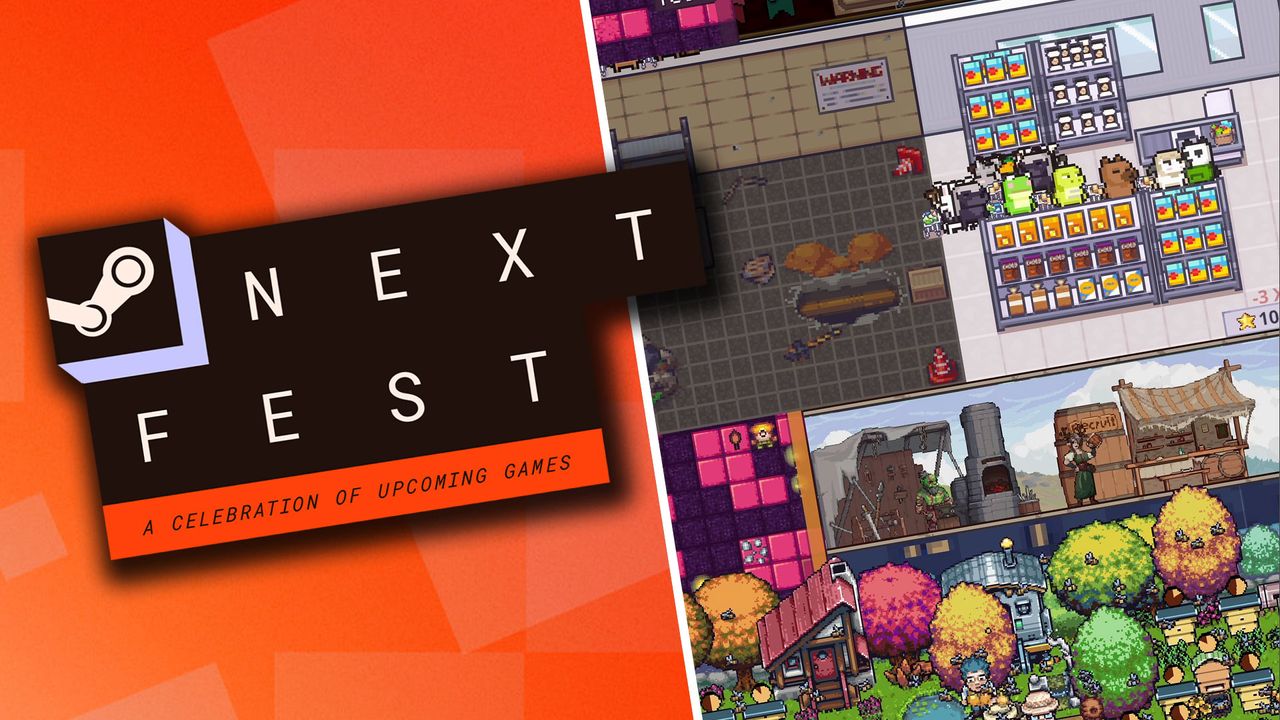
The recent Steam Next Fest descended upon us like an avalanche of digital dreams. For any enthusiast of idle games, this event is a veritable feast, a cornucopia of untapped potential, a treasure trove brimming with nascent experiences. However, the sheer volume of available game demos can swiftly transform exhilaration into an overwhelming deluge. Imagine standing before an endless buffet, each dish a tantalizing promise, yet knowing that consuming even a fraction of it is an impossible task. This was the predicament I found myself in, facing a towering stack of 45 distinct idle game demos, each beckoning for a moment of my attention. The prospect of wading through this digital ocean, even with the promise of hidden pearls, felt like trying to count grains of sand on an infinite beach.
The Genesis of a Strategy
The initial impulse was to succumb to the chaos, to pick randomly, to let serendipity guide my exploration. But as I stared at the sheer magnitude of the offerings, a different approach began to crystallize. This wasn’t just about playing games; it was about orchestrating an experience, a strategic deployment of my limited playtime. The idea of a desktop companion battle royale began to form in my mind – not a literal battle royale of collapsing servers and last-player-standing scenarios, but a metaphorical contest for my attention, my time, and my discerning evaluation. Each demo became a combatant, vying for the coveted title of “most promising,” “most engaging,” or “most likely to evolve into a full-fledged gem.” This mental framing was the spark, the ignition of a methodical conquest.
Orchestrating the Grand Spectacle
The sheer number of idle game demos necessitated a system, a robust framework that could support this ambitious undertaking. Simply launching each one sequentially would be akin to trying to drink from a firehose. The solution lay in concurrent exploration, a symphony of simultaneous engagement. Imagine a conductor standing before an orchestra, not directing one instrument at a time, but guiding every section, every note, every crescendo and diminuendo, all at once. This was the essence of my strategy. I began by categorizing and prioritizing, much like a general surveying a battlefield, identifying key objectives and potential threats. The desktop companion battle royale was not born of a single, grand revelation, but rather a series of calculated maneuvers.
The core of this strategy involved running multiple game demos concurrently. This wasn’t about deep dives into each individual experience; rather, it was a rapid-fire assessment, a first impression triage. Think of it as speed dating for idle games. Each demo had a brief window to capture my interest, to demonstrate its unique mechanics, its potential for long-term engagement, and its overall polish. The goal was not to master each game, but to quickly discern its essence, its core loop, and whether it held the promise of captivating me further. This multi-tasking approach, however, required a keen eye for detail and an almost uncanny ability to switch contexts without losing the thread of each individual experience.
To manage this ambitious endeavor, I employed a tiered system of engagement. Initially, all 45 idle game demos were activated. This initial wave was dedicated to a superficial sweep, a quick visual inspection. I looked for intuitive interfaces, appealing art styles, and the immediate presence of that addictive idle game dopamine loop. Demos that failed to impress within the first few minutes were relegated to a secondary queue, not discarded entirely, but placed on hold, awaiting a potential revisit if time permitted. This acted as a powerful filter, ensuring that my most valuable attention was focused on the contenders with the highest initial impact.
As the number of actively running demos thinned, the subsequent phases became more refined. Those that passed the initial inspection were then subjected to slightly deeper scrutiny. I would spend a bit more time observing their progression, how they handled early-game mechanics, and the clarity of their early-game goals. This is where the true “battle” began, as games started to differentiate themselves not just on presentation, but on substance. Some offered surprising depth, others revealed themselves to be mere reskins of established tropes. The Steam Next Fest became a crucible, separating the truly innovative from the merely competent.
The concept of a “desktop companion” also informed my approach. I was not looking for games that demanded constant, active input, but rather those that could occupy a secondary space, providing passive entertainment or a rewarding sense of progression without monopolizing my primary focus. This meant that games with overly complex UIs or those that required constant micro-management were less suited to this particular battle royale. The ideal companion is one that is there when you need it, offering a gentle hum of activity and satisfaction, a quiet ally in the often-demanding landscape of desktop productivity.
The Art of Strategic Exclusion
The process was not without its challenges. There were moments when the sheer volume threatened to overwhelm, when the overlapping sounds and visual elements created a digital cacophony. However, by establishing clear criteria for progression and employing a methodical, almost surgical approach to evaluation, I was able to maintain control. It required discipline, a willingness to make swift decisions, and an understanding that not every demo would reveal its full potential in a fleeting encounter. The Steam Next Fest, while a treasure trove, also demands a skilled navigator.
In essence, my strategy for tackling the Steam Next Fest’s overwhelming offering of idle game demos was to transform the potential chaos into a structured competition. By running 45 demos simultaneously, I created a unique form of desktop companion battle royale, where each game actively competed for my attention and ultimately, my commendation. This methodological approach allowed me to sift through the vast quantities of playable content and identify the diamonds in the rough, ensuring that the spirit of discovery remained vibrant amidst the deluge.
Key Takeaways:
- Concurrent Evaluation: Running multiple demos simultaneously accelerates the discovery process.
- Tiered Engagement: Implement stages of assessment, from initial impressions to deeper dives.
- Companion Focus: Prioritize games that function well as secondary, less demanding experiences.
- Defined Criteria: Establish clear metrics for success to ensure objective evaluation.
“The ocean of Steam Next Fest demos can be intimidating, but with the right strategy, it transforms into a navigable sea of opportunity.”