
A Geological Marvel Reimagined
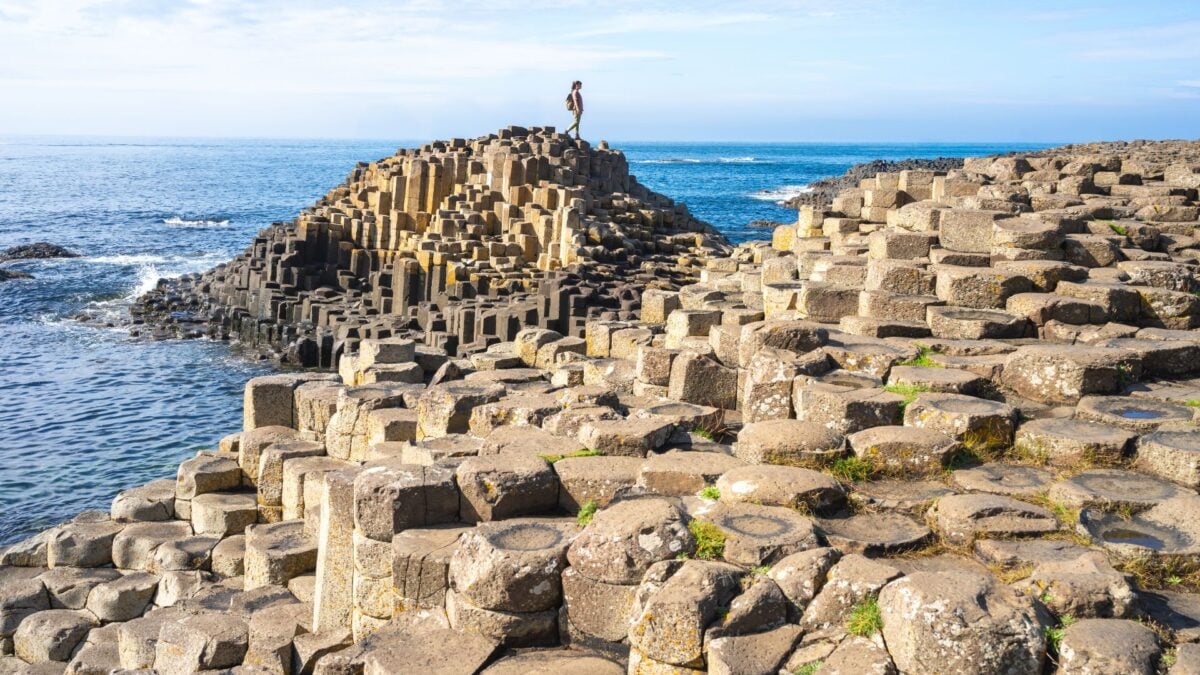
For centuries, the Giant’s Causeway, a breathtaking natural wonder on the coast of Northern Ireland, has captivated imaginations and sparked countless debates about its origins. While the enchanting tales of giants warring across the Irish Sea have long been a cherished part of local folklore, a groundbreaking new scientific study is poised to rewrite the very genesis of this iconic landscape. Emerging research points towards a globally significant volcanic event as the true architect of these hexagonal basalt columns, a narrative far grander and more powerful than any mythical skirmish.
Historically, the prevailing scientific understanding attributed the Causeway’s formation to slow cooling of basalt lava flows over many millennia. However, the latest findings, published recently, propose a far more dynamic and rapid process. Scientists have identified evidence suggesting that the unique geometric patterns of the stones are the direct result of a massive volcanic outpouring that occurred approximately 60 million years ago. This was not a gentle effusion of magma, but rather a swift and intense eruption, a true testament to the Earth’s raw power.
The research delves into the crystallisation patterns and cooling rates of the basalt, revealing characteristics consistent with very rapid cooling under specific pressure and temperature conditions. This suggests that the lava, once erupted, underwent a process of thermal contraction, leading to the formation of these remarkably uniform, polygonal columns. The sheer scale of this ancient volcanic activity is what truly sets this new theory apart. It implies that this event had far-reaching consequences, potentially impacting global climate and geological formations far beyond the immediate vicinity of the Causeway itself.
According to Irish mythology, the story of the Giant’s Causeway is inextricably linked to Finn McCool, a legendary giant said to have built the causeway to walk to Scotland to confront a rival, the Scottish giant Benandonner. The legend tells of Finn’s strategic prowess and eventual triumph, a narrative that has been passed down through generations, weaving a tapestry of folklore around this extraordinary geological feature. This rich cultural heritage now finds a compelling scientific counterpoint, offering a dual perspective on the site’s profound significance.
A Saga of Fire and Fury
The new scientific perspective paints a picture of a truly cataclysmic volcanic episode. The sheer volume of lava that erupted, combined with the specific environmental conditions at the time, were crucial in shaping the Causeway. Think of it like pouring molten glass into a mold, but on an immense geological scale. As the lava cooled and contracted, it fractured in a way that favoured these hexagonal shapes, a phenomenon known as columnar jointing. The uniformity and precision of these columns are truly astonishing, leading many to marvel at nature’s architectural prowess.
This research isn’t just about reinterpreting a single geological site; it’s about understanding a pivotal moment in Earth’s history. The volcanic event linked to the Giant’s Causeway could have been part of a much larger series of eruptions that shaped the North Atlantic region. These ancient volcanic provinces played a significant role in the breakup of continents and the formation of new oceans. The Causeway, therefore, becomes a tangible, awe-inspiring fragment of this grander geological narrative.
Personal Anecdote: A Close Encounter with a Smaller Giant
Speaking of giants and unexpected encounters, my own experience with a rather formidable creature that rivaled Finn McCool in its sheer bulk and determined nature comes to mind. I was on a hiking trip in the Scottish Highlands, far from any coast, when I stumbled upon a particularly large and rather grumpy-looking Highland cow. It was grazing in a narrow pass, effectively blocking my path. Now, I’ve always considered myself reasonably sensible, but the sheer size of this bovine beast, with its shaggy coat and impressive horns, was intimidating. It stared me down, its breath misting in the crisp mountain air, and let out a low, rumbling moo that seemed to vibrate through the very ground. For a good ten minutes, I was locked in a silent, tense standoff. I tried polite coughs, gentle foot shuffles, and even attempted to reason with it by explaining my urgent need to reach the next village. All to no avail. Finally, I noticed a slightly wider, albeit muddier, detour to the side. Mustering all my courage and trying to channel a bit of Finn McCool’s bravery, I made a dash for it, splashing through the mud and keeping a wary eye on my bovine adversary. It watched me go, completely unphased, before returning to its grazing as if nothing had happened. It wasn’t quite battling a Scottish giant, but for a few moments, I definitely felt like I was facing down a force of nature, a true, albeit smaller, giant of the Scottish countryside.
This unexpected encounter, while humorous in retrospect, highlights how even in seemingly ordinary moments, we can find ourselves in the presence of something powerfully imposing. It reminds me that the world is full of wonders, both natural and, perhaps, a little bit wild, much like the forces that sculpted the Giant’s Causeway. The cow, in its own way, was a miniature embodiment of raw power and territorial assertiveness, a far cry from the gentle giants romanticized in folklore, but a compelling reminder of nature’s unyielding presence.
A Legacy Carved in Stone and Legend
The dichotomy between the scientific explanation and the mythical narrative of the Giant’s Causeway is what makes it such a unique and enduring attraction. While scientists work to unveil the precise geological mechanisms, the stories of Finn McCool continue to resonate, adding a layer of human drama and wonder to the already spectacular landscape.
The new research provides a thrilling scientific framework to understand the sheer power and scale of the ancient volcanic activity. It shifts the focus from a slow, gradual process to a dramatic, decisive geological event. The implications of this discovery are significant, potentially influencing our understanding of other similar geological formations across the globe and providing further insights into the Earth’s dynamic past.
In essence, the Giant’s Causeway serves as a magnificent bridge between the tangible world of geological science and the intangible realm of human imagination. It is a place where the raw, elemental forces of nature have met with the enduring power of storytelling, creating a legacy that continues to inspire awe and curiosity in visitors from around the world.