
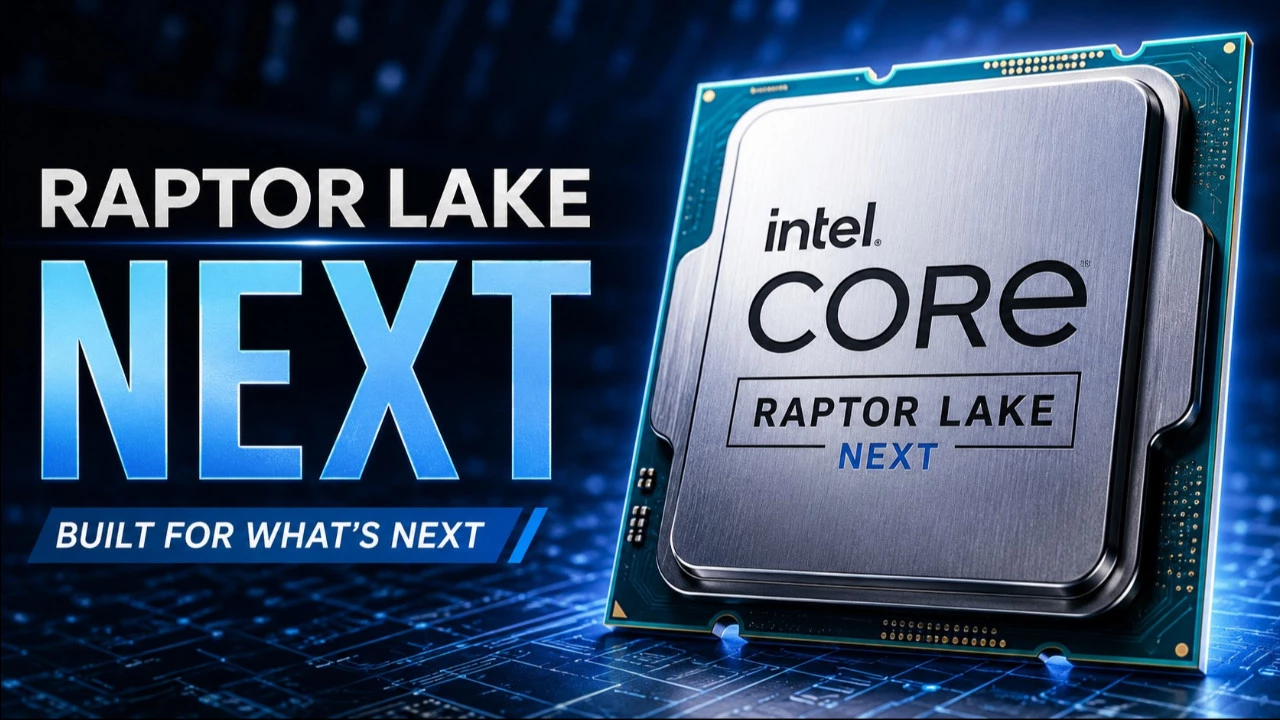
The Whispers of Raptor Lake Next: A Glimmer of Hope in the Component Crisis
As a seasoned professional in the demanding world of PC gaming, I’ve witnessed firsthand the ebb and flow of hardware availability and pricing. The current landscape, unfortunately, has been characterized by a prolonged period of elevated component costs, making it increasingly challenging for aspiring gamers and budget-conscious builders to assemble powerful and performant systems. This has led to a significant barrier to entry, effectively segmenting the PC community into those who can afford the latest hardware and those who are left yearning for more accessible options. However, recent industry murmurs suggest that Intel might be preparing a rather ingenious maneuver to address this persistent issue. Reports indicate that the company is potentially revisiting its widely adopted LGA 1700 socket for a “third coming” with a new lineup codenamed Raptor Lake Next, specifically engineered for maximum budget-friendliness. This development, if it materializes as speculated, could represent a crucial turning point in the ongoing component crisis.
The original LGA 1700 platform, introduced with the Alder Lake processors, has served the industry admirably, offering a solid foundation for mainstream and enthusiast builds alike. The prospect of Intel leveraging this established socket once more, rather than pushing for a completely new and potentially expensive architecture, is a strategic decision that speaks volumes about their understanding of the current market dynamics. By re-optimizing processors for an existing, widely manufactured socket, Intel can significantly reduce production costs. This cost reduction, in theory, should translate directly into lower retail prices for consumers. The focus on “maximum budgetality” is not merely a marketing buzzword; it signals a clear intention to capture a segment of the market that has been severely underserved due to the prohibitive cost of newer, more advanced components. This could include entry-level gamers, students, and general productivity users who are looking for capable systems without breaking the bank.
The Strategic Advantage of Reiteration
My experience in competitive gaming has also taught me the value of efficiency and smart resource management. Applying this to the hardware market, it’s clear that Intel’s potential strategy with Raptor Lake Next is rooted in sound economic principles. Instead of investing heavily in entirely new manufacturing processes and designs for a completely novel socket, Intel can leverage its existing infrastructure and economies of scale associated with the LGA 1700 platform. This allows for a more streamlined production process, potentially leading to faster production cycles and a more consistent supply of these budget-oriented processors. Furthermore, the maturity of the LGA 1700 ecosystem, including motherboards and memory solutions, means that consumers won’t face the added expense of investing in entirely new supporting hardware if they are upgrading from an older LGA 1700 system. This significantly lowers the total cost of ownership for a new PC build.
Key advantages of this approach include:
- Reduced Manufacturing Costs: Utilizing an established socket and manufacturing lines directly impacts the cost of production for Intel.
- Lower Motherboard Prices: The widespread availability and mature production of LGA 1700 motherboards will naturally keep their prices competitive.
- Component Compatibility: Existing DDR4 RAM, a common and more affordable memory standard, is largely compatible with LGA 1700 motherboards, further reducing build costs.
- Faster Market Ingress: Reusing existing infrastructure allows for a quicker rollout of new products compared to developing entirely new platforms.
Navigating the Budget Landscape: What to Expect and How to Prepare
“Every frame counts, and so does every dollar when building a reliable rig.”
While the specifics of the Raptor Lake Next lineup are still under wraps, we can make some educated assumptions based on Intel’s past strategies in the budget segment. It’s highly probable that these processors will feature a refined architecture, possibly with a focus on a more balanced core configuration and potentially lower clock speeds or fewer high-performance cores compared to their more premium counterparts. However, even with these optimizations, a well-designed budget processor can still offer impressive performance for everyday tasks and a surprisingly capable gaming experience, especially when paired with an appropriately chosen graphics card.
My advice to aspiring builders looking to capitalize on this potential influx of budget-friendly hardware would be twofold:
- Research and Prioritize: Understand your primary use case. If gaming is the main objective, allocate a larger portion of your budget to the graphics card and complement it with a capable Raptor Lake Next CPU. For general productivity, the CPU will be more critical, but even then, a budget processor should suffice for most tasks.
- Embrace the Ecosystem: LGA 1700 motherboards offer a wide range of options, from barebones budget boards to more feature-rich models. Carefully assess the features you truly need (e.g., sufficient USB ports, M.2 slots, Wi-Fi) to avoid overspending on unnecessary extras. Consider motherboards that support DDR4 memory for the most cost-effective RAM solution.
It is crucial to manage expectations. These processors will not be designed to compete with Intel’s high-end Core i7 or i9 offerings. Their strength will lie in providing a solid baseline of performance at an accessible price point. For example, a CPU from this lineup might be an excellent choice for esports titles like League of Legends, Valorant, or CS:GO, where high frame rates are desirable but not necessarily demanding on the CPU’s raw power. For more graphically intensive AAA titles, the bottleneck will likely shift to the GPU, making a budget CPU a sensible pairing. It’s a matter of finding the right balance within your financial constraints. The return of the LGA 1700 platform for a budget-focused lineup signals a thoughtful response from Intel to the ongoing economic challenges facing PC enthusiasts. This “third coming” could very well usher in a new era of accessibility, allowing more individuals to experience the joy and performance of a custom-built PC.