
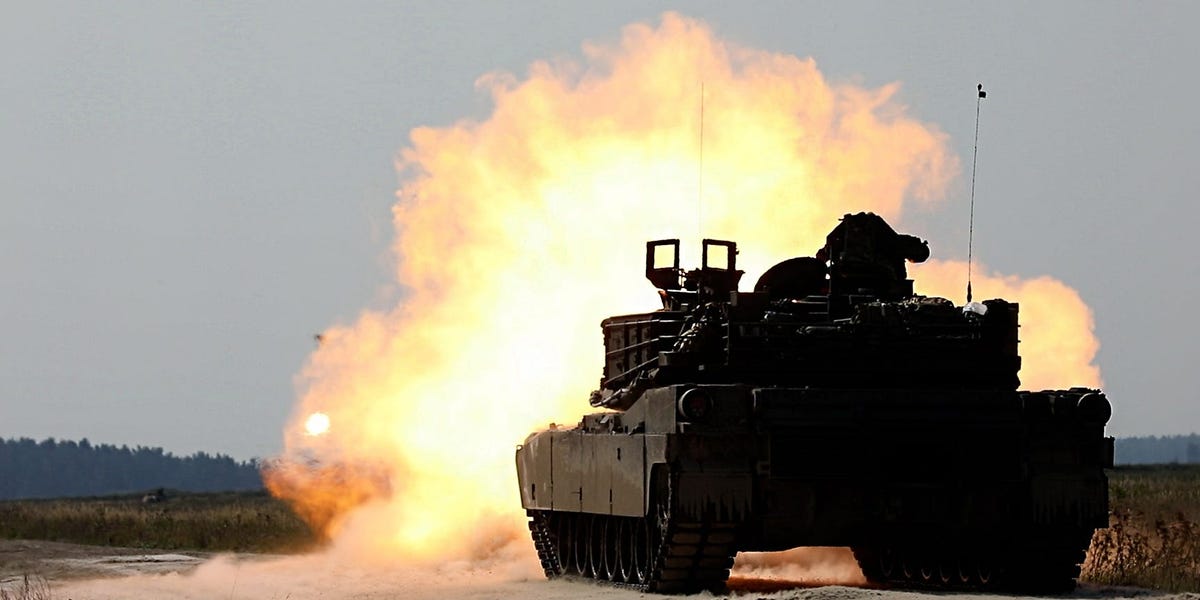
The United States Army secretary recently declared that the tank, a seemingly immutable symbol of ground warfare, is far from obsolete, despite the burgeoning dominance of drones and other unmanned systems in modern conflict. While acknowledging the shifting battlefield dynamics, the secretary emphasized that the tank’s role will simply evolve, rather than disappear entirely. In future conflicts characterized by a heavy reliance on aerial drones and precision-guided munitions, tanks will likely not be the vanguard forces, spearheading the initial assault. Instead, their deployment will be more strategic and contingent, a critical component of a larger, multifaceted military operation.
This strategic repositioning doesn’t signal the tank’s demise; it reflects a pragmatic adaptation to the changing nature of warfare. The inherent strengths of tanks—their powerful firepower, robust armor protection, and ability to operate effectively in diverse terrains—remain highly valuable. However, their effectiveness will be optimized by incorporating them into a carefully orchestrated plan, rather than employing them in the traditional, often high-risk, lead-the-charge approach. The Army recognizes the need to leverage the capabilities of tanks in conjunction with other assets, ensuring their operational superiority within the context of a larger tactical and strategic plan. This involves a greater emphasis on integrated warfare, combining the strengths of armored vehicles with the precision and reach of drones, long-range artillery, and cyber capabilities.
The secretary’s statement highlights the crucial need for the US Army to embrace adaptive modernization. The focus will be on enhancing existing tank capabilities to better counter emerging threats, integrating advanced technologies such as improved sensor systems, enhanced communication networks, and more sophisticated targeting systems. This approach will ensure that tanks remain a potent force, albeit one operating within a more nuanced and complex military landscape.
The evolving role of the tank necessitates a parallel evolution in training and doctrine. Soldiers will need to be adept at integrating tank operations with unmanned aerial systems, cyber warfare techniques, and other advanced technologies. The focus will shift from simply mastering the operation of the tank itself to understanding its place within the broader context of a technologically advanced battle space. This requires significant investment in training simulations and advanced combat exercises that accurately reflect the future operational environment.
I remember one particularly memorable training exercise in the Mojave Desert. Our platoon was tasked with providing armored support for a simulated drone strike operation. We were positioned several kilometers from the designated target area, our mission being to provide immediate backup should anything go wrong – a relatively uncommon scenario considering the technological sophistication of the drones. The exercise was designed to push the boundaries of our tactical thinking, forcing us to consider the complexities of coordinating tank movements with drone deployments, which was, I must admit, much more tricky than it initially seemed. Things were going smoothly until our platoon sergeant decided to test the limits of our tank’s radio. In his excitement, he ended up accidentally playing a rather loud and cheerful polka song across the entire communication network, much to the embarrassment of everyone involved.
The exercise concluded with a spirited debate on appropriate communication protocols during high-stakes operations. We certainly learned a valuable lesson that day about the importance of clear communication and the unexpected challenges of integrating technology into real-world combat scenarios. This experience highlighted the importance of anticipating and accounting for all potential variables, a critical component in preparing for the future of tank warfare. Though the polka incident was a minor catastrophe, it underscored the need for meticulous planning and rigorous training, especially as technology increasingly integrates into modern warfare.
Key Considerations for the Future of Tanks
The ongoing evolution of tank warfare necessitates careful consideration of several key factors:
- Technological Integration: Seamless integration of tanks with other assets is paramount.
- Network-Centric Warfare: Enhanced communication systems are crucial for coordination.
- Advanced Training: Soldiers require training on integrated combat scenarios.
- Adaptability: Continual adaptation to evolving threats is crucial.
In conclusion, the tank, though potentially less prominent in the opening stages of future conflicts, is far from obsolete. Its continued relevance hinges on its ability to adapt, integrate with evolving technologies, and function as a vital component of a broader, interconnected military strategy. The future of warfare is complex, and the tank’s role will undoubtedly continue to be redefined as the technological landscape shifts.